
Bitcoin price holds $60K as Middle East tensions fail to spark panic
Bitcoin is trading near $60,000 after a volatile week that pushed the largest cryptocurrency to its lowest level since late 2024.
Summary
- Bitcoin is holding near $60,000 despite Middle East tension and renewed pressure from Strategy concerns.
- Analysts say a break above $66,000 could revive momentum, while $58,000 remains key support.
- On-chain data shows weaker short-term holder dominance, a structure often seen near accumulation zones.
The price has stayed calm through the weekend, even as new tension in the Middle East tested risk appetite across global markets.
BTC had opened the previous business week with strength, rising to about $65,500 after reclaiming support near $64,000. That move failed to hold. Sellers later pushed the asset below $62,400, then toward $59,000, before another drop sent Bitcoin near $58,000.
Bitcoin steadies after sharp weekly sell-off
Bitcoin’s latest price action shows a market trying to hold a base after a fast decline. BTC now trades around the $60,000 area, with bulls defending the zone after repeated tests below that mark.
The weekend calm stands out because the U.S. and Iran exchanged fresh blame over the broken ceasefire. Earlier this month, Bitcoin had climbed above $65,500 after a U.S.-Iran deal eased oil and inflation fears across markets.
That relief rally did not last. Bitcoin soon lost strength as traders returned to concerns around liquidity, ETF flows, and Strategy-related risk.
The current setup leaves BTC stuck between two near-term levels. A move below $58,000 could invite more selling, while a clean recovery above $64,000 to $66,000 may show that buyers are regaining control.
Strategy fears remain a market pressure point
One of the main pressure points remains Strategy, the company formerly known as MicroStrategy. Growing concern around its capital structure has affected Bitcoin sentiment because the firm remains the largest corporate holder of BTC.
As previously reported, Bitcoin fell below $60,000 for the second time in June as liquidations topped $850 million. Strategy shares also dropped sharply as traders watched the company’s stock, preferred shares, and Bitcoin treasury.
Another report said Strategy’s Bitcoin flywheel has started to work in reverse. The company once used a stock premium to raise capital and buy more BTC, but weaker market pricing now makes that model harder to sustain.
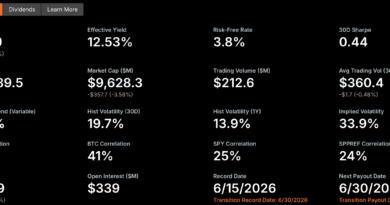
CryptoQuant has also urged Strategy to pause Bitcoin purchases and rebuild cash reserves. The firm said dividend coverage tied to STRC had fallen to about 14 months as cash reserves declined.
This pressure does not mean Strategy must sell Bitcoin now. Still, the market is watching whether further stress in STRC or MSTR could create more fear around BTC.
Analysts split on breakout or deeper chop
Crypto analyst Market Watcher said Bitcoin’s weekly structure remains clear. The analyst pointed to a downtrend from the July and August highs near $70,000 and $67,000 and said a break of that line would make them more willing to deploy capital.
The same analyst described the current zone as “indecisive summer chop” between about $59,000 and $66,000. That range matches the current market, where BTC has not broken down fully but has also failed to reclaim lost momentum.
Market Watcher said a break of the main trend near $58,000 would change the setup. The analyst also compared the current downtrend to the December 2022 and January 2023 breakout, which later started a major BTC uptrend.
EGRAG CRYPTO took a longer view and focused on Bitcoin’s 12-month cycle. The analyst said the usual rhythm has been three years up and one year down, but this cycle may be different if 2026 closes as a red yearly candle.
EGRAG said the four-year cycle remains intact for now, but added that structure matters more than hope. That view keeps attention on the yearly close and whether Bitcoin can regain a stronger long-term pattern.
On-chain data points to possible reset
CryptoQuant analyst Crazzyblockk said Bitcoin’s short-term holder realized dominance has fallen to 27.6%. The analyst said that places BTC inside a historical undervaluation zone where long-term holders control most realized capital.
In past cycles, market tops formed when short-term holders held most realized capital. That often showed heavy speculation and late-cycle buying.
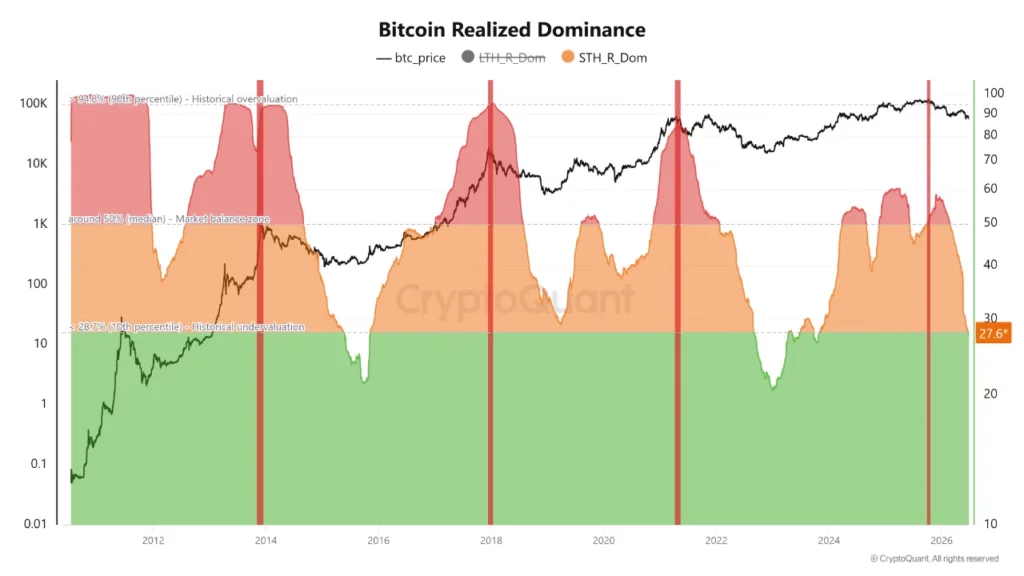
Bear markets have shown the opposite setup. Short-term holders realize losses, their share of realized capital falls, and long-term holders regain control.
The analyst said current data looks closer to past accumulation phases than cycle tops. However, they also warned that bottoms often form through a process, and another capitulation phase remains possible.
Another CryptoQuant analyst, Facundo Fama, pointed to long-term holder SOPR. The analyst said when LTH-SOPR moves near or below 1, long-term holders are selling coins at or near a loss.
The last time LTH-SOPR stayed below 1 on the monthly timeframe for more than three months was in October 2022, when BTC traded near $20,000. That data does not guarantee a bottom, but it shows that long-term holder stress has returned to a rare zone.
Bitcoin price outlook
Bitcoin’s short-term outlook now depends on whether bulls can defend $58,000 and recover the $64,000 to $66,000 range. A close above that upper band could support a stronger recovery attempt.
A loss of $58,000 would weaken the current base and could expose lower areas as traders reduce risk. In that case, Bitcoin may revisit deeper support before building a new range.
For now, BTC is neither breaking down nor confirming a strong reversal. The market remains calm near $60,000, but that calm depends on support holding, Middle East risk staying contained, and Strategy-related fear easing.
Disclosure: This article does not represent investment advice. The content and materials featured on this page are for educational purposes only.