Kylie Jenner, Phia, and the new push to sell AI to women
Kylie Jenner’s latest fashion campaign is selling more than a pair of sunglasses.
In the ad for Meta‘s new “Kylie Edition” AI-powered glasses, Jenner moves through an unusually glamorous version of an ordinary morning. She touches up her manicure, looks through her closet, drinks green juice, and briefly inspects the work being done around her home. She eventually slips away from her assistants, drives to a billboard bearing her own face, and spray-paints “XO Kylie” across it.
This Tweet is currently unavailable. It might be loading or has been removed.
Meta’s fashion-first approach for the June 2026 campaign extended far beyond the ads, though. The company also introduced 26 combinations of frames, colors, and lenses, launched a dedicated Instagram account, plastered Jenner’s face on billboards in New York and Los Angeles, and hosted a star-studded launch event. Fashion heavyweights and creators like Law Roach, Nara Smith, and Peggy Gou attended the debut.
It’s clear that this rollout doesn’t position the glasses, which Meta and Ray-Ban have been selling in some form since 2021, as some complicated new gadget. Instead, it’s selling them as a fashion accessory…and a trendy one at that.
This Tweet is currently unavailable. It might be loading or has been removed.
This Tweet is currently unavailable. It might be loading or has been removed.
This Tweet is currently unavailable. It might be loading or has been removed.
Meta isn’t alone in this approach. Tools powered by artificial intelligence have quietly woven themselves into beauty routines, shopping apps, and podcasts, all targeted toward female consumers. The Cut called this phenomenon the “Girlbossification of AI” in a May 2026 article, and the marketing tactic is still gaining momentum in the industry.
It isn’t coincidental. A 2026 Pew Research Center survey found 27 percent of men said they used chatbots daily, compared with 20 percent of women. Men were also more likely to use them for work and to say the technology improved their productivity.
Lean In, the workplace-empowerment nonprofit founded by former Meta executive Sheryl Sandberg, found a similar divide. Sandberg’s 2013 book of the same name helped define the “girlboss” era. In the organization’s survey, 33 percent of men said they used AI daily or constantly at work, compared with 27 percent of women. Men were also more likely to receive encouragement and opportunities to experiment with the technology.
For AI companies, women represent an untapped market — they know the technology exists but haven’t woven it into their daily lives. That creates a clear opportunity: build products that integrate AI into activities women already do, like shopping, getting ready, creating content, and managing their day-to-day tasks.
Early demand, according to Meta, suggests the demographic can indeed be accessed this way. At one creator event shortly after the release, every colorway of the Kylie glasses had sold out before many reporters arrived, while other women at the event were asking for the same frames by name.
The interest extended beyond the room. In the week surrounding the launch, Glossy reported data from Dash Social showing that Meta Glasses generated 275 million social media impressions, 9 million engagements, and 97,000 mentions. Jenner’s 3 dedicated Instagram posts promoting the collection received a combined 5.5 million likes, while the new @metaglasses account approached 100,000 followers within 11 days of going live.
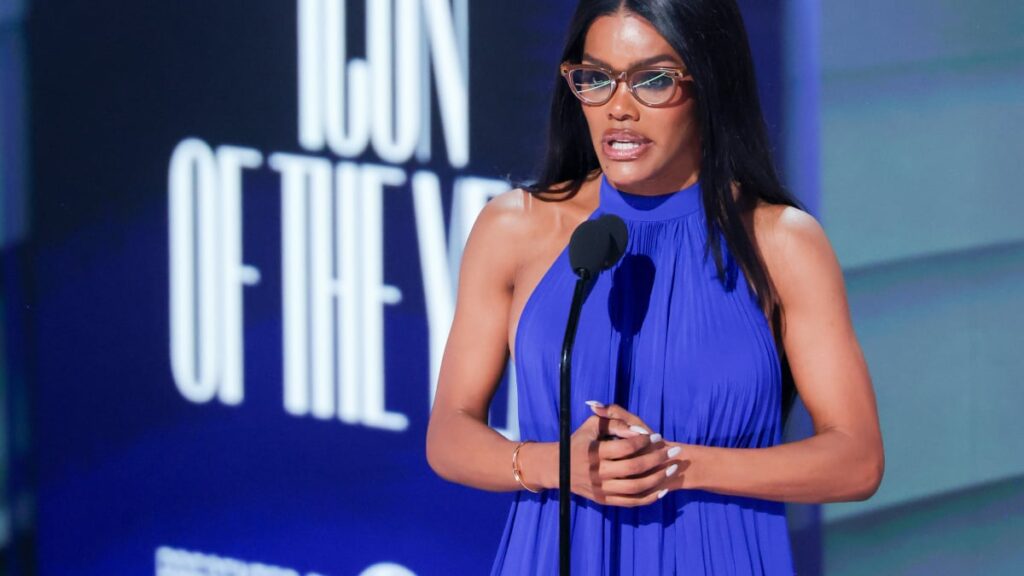
Other celebrities have helped promote the tech, including model and F1 “WAG” Alexandra Saint Mleux, Blackpink’s Jennie, performer Doja Cat, and Oscar-nominated actress Teyana Taylor.
This Tweet is currently unavailable. It might be loading or has been removed.
This Tweet is currently unavailable. It might be loading or has been removed.
This Tweet is currently unavailable. It might be loading or has been removed.
This Tweet is currently unavailable. It might be loading or has been removed.
Together, those efforts place the glasses in front of audiences that care as much (or more) about who is wearing them as the technology inside, helping the product circulate online like any other popular accessory.
Influencers offer another opportunity for AI companies
Influencers are another marketing conduit for AI products — as seen through the beauty AI company, Swan Beauty.
The startup sells a $795 smart mirror that can analyze a user’s skin, recommend products, guide makeup application, and record content. Though it’s been available since 2023, the company shot to internet fame after placing the mirror in the center of an event that young women were probably going to watch anyway.
Back in April 2026, Swan AI flew content creator Brigette Pheloung — better known online as Acquired Style — and 16 of her closest friends to a villa in St. Barth’s for a bachelorette weekend dubbed “Acquired A Husband.”
Pheloung and her twin sister Danielle (also an influencer) documented the trip across social media, where the mirror made appearances alongside coordinated outfits, makeup routines, friendship content, and a private plane. Several guests, including Lauren Wolfe and Kit Keenan, were creators with substantial followings of their own.
This Tweet is currently unavailable. It might be loading or has been removed.
The exposure paid off. The company reported its TikTok profile views rose by 140,000 percent and saw a 650 percent week-over-week increase in mirror sales, a 4,535 percent increase in iOS app downloads, and a 4,900 percent increase in subscriptions following the trip.
Like Meta’s Kylie campaign, the partnership pitched the product as both aspirational and accessible (well, as accessible as a $795 mirror can be).
Entrepreneurs Phoebe Gates (daughter of Bill Gates) and Sophia Kianni have also found a different way to market their AI shopping platform, Phia, to female consumers: by creating a parallel podcast targeting entrepreneurial women.
Mashable Trend Report
The former Stanford roommates launched Phia in April 2025. Its browser extension and app help shoppers compare prices, find secondhand alternatives, and estimate whether an item is likely to retain its resale value. The company says it has since reached 1.5 million users and partnered with 9,600 brands.
Phia’s public identity, however, extends well beyond the shopping tool. Gates and Kianni also host The Burnouts, a weekly podcast about building a company in their 20s while navigating friendship, dating, money, and, as the title suggests, burnout.
This Tweet is currently unavailable. It might be loading or has been removed.
Guests have included Paris Hilton, Kris Jenner, Chelsea Handler, and Karlie Kloss.
This forward-facing, founder-focused approach has made Gates and Kianni part of Phia’s appeal. Listeners follow their friendship, the company’s growth, and the complications of building both at the same time. Their profiles have risen alongside the startup — the pair were named to the TIME100 Next list, and they both received Forbes 30 Under 30 recognition.
This Tweet is currently unavailable. It might be loading or has been removed.
That cultural reach has helped the start-up attract serious funding — and serious scandal (more on this below). The company raised a $35.5 million Series A in 2026, bringing its total funding to $43.5 million. Its backers include a litany of famous women: Khloé Kardashian, Mindy Kaling, Sydney Sweeney, Paris Hilton, Alix Earle, Jessica Alba, Priyanka Chopra Jonas, and Rachel Zoe (to name a few). Gates told Vogue that Phia deliberately sought out cultural figures who “reflected the customers it wanted to reach.”
Celebrity can be appealing — and many prominent women are using their own platforms to encourage followers to adopt the technology through both organic and paid promotion.
This Tweet is currently unavailable. It might be loading or has been removed.
This Tweet is currently unavailable. It might be loading or has been removed.
Reese Witherspoon became one of the loudest voices back in April, when she told her 30 million Instagram followers in a (now-deleted) Instagram post that only three of the 10 women in her book club had tried AI, and just one felt confident using it. Critics accused her of repackaging pressure to adopt the technology as empowerment, particularly after her company, Hello Sunshine, partnered with Purdue University on AI courses for young women.
She also told Glamour in September 2025, “It’s so, so important that women are involved in AI because it will be the future of filmmaking…you can be sad and lament it all you want, but the change is here.”
This Tweet is currently unavailable. It might be loading or has been removed.
Mel Robbins made a similar case through a paid partnership with Microsoft Copilot. She encouraged women, in an Instagram post that was also deleted, to use the chatbot to organize their finances by uploading bank statements, bills, and debt information. She also filmed a podcast episode about the topic, interviewing AI leader Allie K. Miller titled, “How to Use AI to Make Money, Save Time, and Be More Productive”.
Privacy experts and social media users quickly filled the comments warning against sharing sensitive records without understanding the risks, and Robbins later clarified she should have explained those risks more clearly.
Other celebrities have presented AI less as a career requirement than as an unavoidable part of modern life. Sandra Bullock has urged people to understand the technology and find constructive ways to use it. Demi Moore made a similar argument at the Cannes Film Festival, saying, “AI is here. To fight it is a battle that we will lose,” and urging people to find better ways to work with the technology.
Paris Hilton has dove deep into the AI waters: she was Android’s first “icon-in-residence,” using Gemini Canvas to build Iconic Ideas, uses an AI model trained on her past interviews, appearances, and creative work to help develop new ideas and content, and hosted an Android Innovation Challenge where young women used AI tools to create apps aimed at improving their lives or communities.
Even Sophia Moruso, the entrepreneur who helped popularize the term “girlboss,” has called on more women to begin using AI.
This Tweet is currently unavailable. It might be loading or has been removed.
This Tweet is currently unavailable. It might be loading or has been removed.
The messages are different, but the promises are broadly the same: AI can help women work faster, manage their money, create more content, and protect the societal progress they have already made.
“These differences — which are not that small, but are smallish now—will compound over time, which is why we think it’s so important for people to understand them and acknowledge them,” Sandberg told Fast Company back in April.
This Tweet is currently unavailable. It might be loading or has been removed.
These celebrities may be selling different products, partnerships, or personal philosophies, but they’re all peddling AI less like a specialized technology and more like another skill all women should add to their lives. “Evolve or get left behind,” as the saying goes.
Not everyone is taking the bait
The effort to make AI feel fashionable, useful, and accessible hasn’t eliminated the fact that many women still approach it with caution — and for good reason.
Privacy, job displacement, misinformation, bias, and the rapid pace of development continue to shape how people view the technology. A 2026 study found that women were roughly twice as likely to expect AI to harm them personally as they were to anticipate any benefits.
This Tweet is currently unavailable. It might be loading or has been removed.
This Tweet is currently unavailable. It might be loading or has been removed.
This Tweet is currently unavailable. It might be loading or has been removed.
Those concerns aren’t hypothetical, especially when AI shows up in sunglasses, beauty tools, or shopping apps.
Meta glasses, for example, can take photos and videos from the wearer’s point of view, raising privacy concerns, especially amongst women: some male creators have used the glasses to secretly film women in public and then uploaded the footage for content.
Meta has also faced reports of users deliberately hiding the small white light that turns on during recording, and you don’t have to look far for ways to circumvent this crucial privacy feature. The company has addressed these concerns and, in July, announced another update that shuts off the camera if the light has been damaged or tampered with. Still, concerns persist.
This Tweet is currently unavailable. It might be loading or has been removed.
Phia has also faced scrutiny, especially in the past week. A July 9 Bloomberg investigation found that the extension could insert Phia’s affiliate tracking information into purchases the company had not helped generate. In some tests, it replaced the referral code belonging to the publisher or advertisement that originally sent the shopper to the retailer. That could allow Phia to receive credit, and potentially a commission, for a sale driven by someone else.
Impact.com, one of the affiliate platforms used by Phia, suspended the company while it reviewed the activity. Phia said the behavior resulted from code introduced in a recent update, affected only a subset of users, and was fixed after the company was alerted. But it was already too late, as the revelation quickly spread across social media, where users questioned whether Phia’s explanation was enough to restore trust.
This Tweet is currently unavailable. It might be loading or has been removed.
This Tweet is currently unavailable. It might be loading or has been removed.
This Tweet is currently unavailable. It might be loading or has been removed.
This Tweet is currently unavailable. It might be loading or has been removed.
Though, some also defended Gates as a 23-year-old, first-time founder.
This Tweet is currently unavailable. It might be loading or has been removed.
This Tweet is currently unavailable. It might be loading or has been removed.
Swan has also raised questions: an Allure reviewer discovered that the mirror counted her smile lines and under-eye lines as wrinkles, which lowered her skin score before suggesting ingredients and products. She wrote that the product, in some ways, lowered her self-esteem.
The app’s own disclosures say it may collect personal information, photographs, videos, and other user data, adding another concern to a device that already combines facial analysis, personalized advertising, shopping, and content creation.
This Tweet is currently unavailable. It might be loading or has been removed.
None of those concerns means these AI products have no use. Meta’s glasses offer translation, communication, and accessibility features. Phia can help shoppers compare prices. Swan can guide users through makeup tutorials and track changes in their skin.
But as AI is packaged for women in prettier and more familiar ways, the question is whether products are actually making women’s lives better…or simply finding a better way to sell to them.