
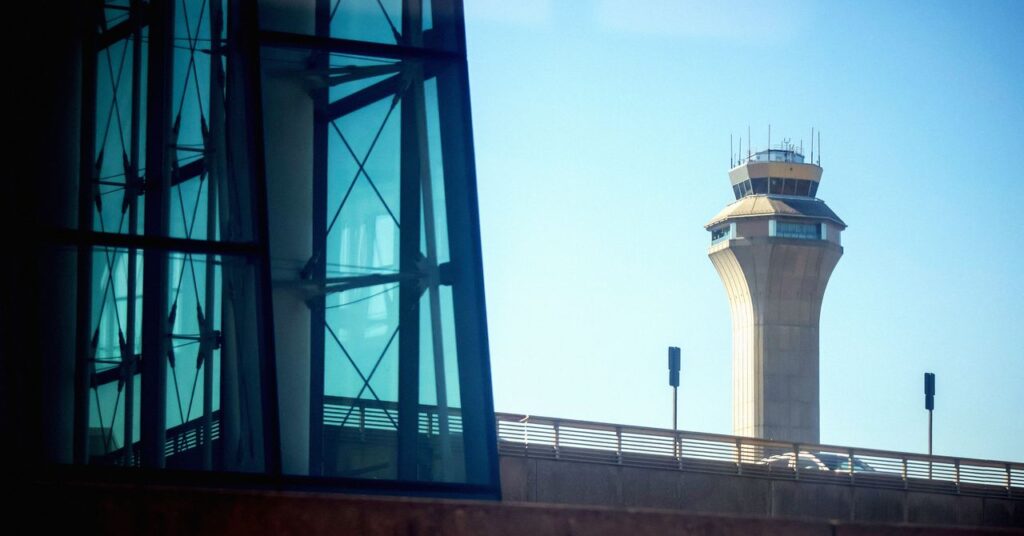
The FAA Nationwide Ground Stop Is Over
Instability in a system that allows communications between the Federal Aviation Administration, air traffic controllers, and pilots was responsible for the country’s most disastrous nationwide ground stop in air traffic since September 11. The ground stop lasted five hours.
Several outlets reported that a failure in the FAA Telecommunications Infrastructure or FTI network, was linked to the FAA’s decision to declare a ground stop. The FTI is the private communications backbone for the air traffic control system. The system is in the midst of a major, multi-year modernization project, which involves replacing a decades-old network of copper wire with high-speed fiber-optic cables. The FAA has said the update will reduce outages and outage-related delays, and make the system safer. It will also be equipped to more easily handle newer aircraft, including drones, electric vertical take-off and landing aircraft (eVTOLs), and other “air taxis.”
At the time the ground stop was lifted on Friday evening, over 6,300 flights within, into, or out of the US had been canceled, according to the aviation tech company FlightAware; 9,500 had been delayed. Freight and mail flights have also been affected. It will likely take days, if not weeks, for airlines to reposition aircraft and crew and get their schedules back on track.
Delays will continue, US Transportation Secretary Sean Duffy said in a Friday evening briefing at the White House. “It will take us some time to unwind what has happened.” He blamed “old switches, old routers” and a “data overload” for the communications systems failure. He said a “legacy system”—likely referring to FTI—was involved.
The issue was caused by “putting patches into the system” as new equipment was being installed, US Department of Homeland Security Secretary Markwayne Mullin said at the White House briefing. “The new technology was overwhelming the older system,” he said.
Mullin said there were no indications that the outage was related to a cyberattack, but “there’s not complete certainty right now.”
The system is managed by the government contractor L3Harris Technologies. On its website, L3Harris says that its “team’s deep knowledge of the US national airspace allows us to upgrade systems without disrupting air traffic operations.” A spokesperson for the company did not respond to a request for comment.
In May, L3Harris said it had completed 50 percent of its modernization project. Seventy percent of FAA sites have been upgraded to fiber, the company said earlier this month. The Trump Administration has said it aims to overhaul the nation’s Air Traffic Control System by the end of 2028.
In August, the FAA tapped AT&T to upgrade the FTI, the private FAA communication network, to an entirely new system. That contract is worth $73 million, though its worth is likely to climb into the billions over the years. Previously, Verizon had been selected to build and operate this new system. L2Harris is meant to operate the legacy system until the upgrades are in place.
Earlier Friday, before the ground stop, US Transportation Secretary Sean Duffy sent a letter to congressional leaders asking them to approve his department’s request for $30.1 billion in funding to further upgrade the air traffic control system, and to improve airports. On Friday, he upped the ask: “I want $50 billion,” he said during a briefing at the White House.
A September report published by the US Government Accountability Office (GAO) raised concerns that the FAA’s attempt to accelerate long-delayed modernization plans “could be prioritizing speed over costs and air traffic disruption.” It found that the FAA does not have a “well-documented” lifecycle cost estimate for its programs, and that, rather than a master schedule guiding the sprawling project, has 11,389 schedules that are not integrated.