

Ethereum price jumps 4%: Can ETH reach $3,000?
Ethereum price has recovered more than 4% to approximately $2,462 on October 16, following a drop toward $2,325 as traders examine whether declining exchange reserves can support another attempt to break above $2,550.
Summary
- Ethereum gained approximately 4% over 24 hours after recovering from Thursday’s recent low near $2,325.
- CryptoQuant reported Binance Ethereum reserves fell 430,000 ETH between August 25 and October 16, 2026.
- Analyst Ted Pillows identified $2,550 as important resistance following Ethereum’s bounce from the $2,350 zone.
- Binance Ethereum open interest declined 4.7% over 30 days, according to CryptoQuant analyst CryptoOnchain recently.
- BitMine reported holding more than six million ETH, approximately 4.9% of circulating supply, in October.
CoinGecko recorded Ethereum (ETH) at $2,460 at press time, with a market capitalization of approximately $300.6 billion and daily trading volume of $14.38 billion. The cryptocurrency traded between $2,324.97 and $2,463.31 over the previous 24 hours, recovering much of Thursday’s losses.
The rebound followed stronger-than-expected U.S. inflation figures that triggered selling across cryptocurrencies and technology stocks. Ethereum’s recovery has brought buyers back toward $2,500, although technical indicators and trading data have yet to confirm a sustained reversal.
Ethereum price rebounds as buyers defend $2,320
Ethereum’s latest decline briefly took the cryptocurrency below $2,350 before buying returned near $2,320. Crypto analyst Alex Marzell identified $2,324 as the level where selling pressure eased following the U.S. producer inflation report.
From that low, ETH gained approximately 6% over nine hours and moved back above $2,420. Marzell said buyers had repeatedly entered during subsequent pullbacks, identifying $2,500 as the next potential target if support continued to hold.
The analyst placed a possible retest near $2,380 if ETH fell below $2,420. His assessment followed the recovery from Thursday’s decline and did not establish whether the current buying would continue.
The earlier selloff occurred as U.S. inflation figures renewed concerns about higher borrowing costs. September consumer prices rose 0.6% from August, while annual inflation reached 3.7%, exceeding market expectations.
During the decline, leveraged traders faced substantial losses. As crypto.news previously reported, the Ethereum inflation driven liquidation event wiped out approximately $106 million in leveraged long positions on Binance within one hour.
CryptoQuant analyst Darkfost described the event as Binance’s largest hourly Ethereum long liquidation in six months. The forced closures occurred as traders holding borrowed positions faced automatic liquidations when prices moved against them.
Ethereum faces resistance between $2,500 and $2,550
Following Friday’s rebound, analysts identified $2,500 as Ethereum’s first resistance area. The level sits above the recent recovery range and below the $2,550 threshold highlighted by crypto analyst Ted Pillows.
Pillows said ETH had bounced after reaching support around $2,350. In his assessment, the cryptocurrency faced limited resistance before $2,550, although a weekly close above that level would provide stronger evidence of a recovery.
The analyst considered a move above $3,000 possible following a confirmed bottom. He cautioned that another decline could occur if ETH failed to establish support above the resistance area.
Ethereum had faced a similar test earlier in October. During the October 12 session, the cryptocurrency approached resistance around $2,575 before retreating, with analysts identifying $2,700 as a potential target following a confirmed breakout.
The latest daily chart showed ETH near $2,459 after recovering from the recent decline. However, the Moving Average Convergence Divergence indicator remained negative, suggesting buyers had not fully reversed the earlier downward momentum.
The MACD line stood at -35.5, below its signal line of -8.6, while the histogram registered -26.9. These supplied chart readings indicate that the recent improvement in price had not produced a bullish crossover.
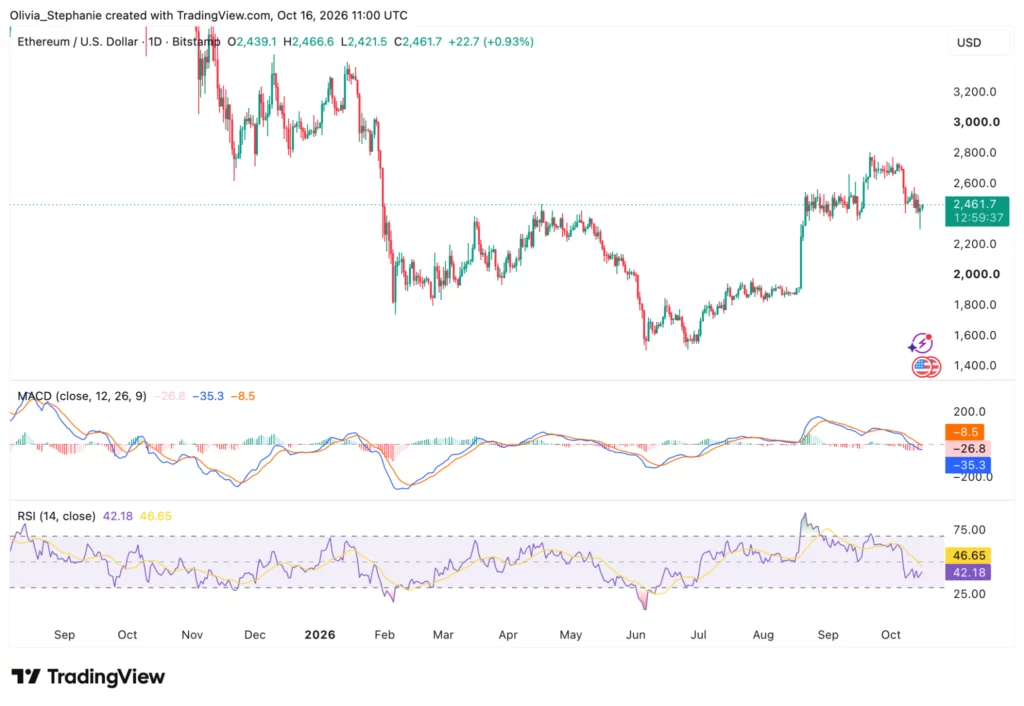
Meanwhile, the Relative Strength Index was 41.93, below its moving average of 46.64. The reading remained under the neutral 50 level without entering traditionally oversold territory.
Based on the supplied technical setup, the first major downside level sits near $2,400. A break below that area could expose 2,300–2,200, while reclaiming $2,550 would bring $2,600 and eventually 2,750–2,800 into focus.
Binance ETH reserves fall as spot trading weakens
Separate exchange data presented a mixed picture of Ethereum’s recovery. CryptoQuant analyst Amr Taha reported that Binance’s ETH reserves declined by 430,000 tokens between August 25 and October 16.
The exchange reportedly held 3.90 million ETH at the beginning of that period, compared with 3.47 million ETH by October 16. Using the analyst’s reference price of $2,437.30, the difference was valued at approximately $1.05 billion.
The 11% reduction represented fewer ETH held in the exchange’s tracked wallets. However, withdrawals do not automatically establish investor accumulation, since funds can move between exchanges, custodians, and privately controlled addresses.
Taha’s analysis identified a simultaneous fall in spot trading activity across centralized exchanges. Seven-day average ETH spot volume declined from $6.73 billion on August 25 to $3.125 billion on October 15, a reduction of approximately 53.6%.
Outside Binance, average volume fell from $4.98 billion to $2.30 billion. Binance’s corresponding activity declined from $1.75 billion to approximately $825 million.
While both groups experienced similar percentage declines, the reported reduction outside Binance amounted to $2.68 billion, compared with $925 million on the exchange.
The analyst’s liquidation heatmap identified approximately $546 million in short-position liquidation clusters above the prevailing market price. Long-position clusters below the market totaled roughly $187 million.
Those figures represent estimated liquidation exposure at specific price levels, not positions that have already been liquidated. The identified short-side exposure was approximately 2.9 times the estimated long-side amount.
Ethereum leverage declines while buying demand remains weak
CryptoQuant contributor CryptoOnchain examined whether Ethereum’s recent losses had reduced excessive leverage in the derivatives market.
The analyst reported that Binance ETH open interest declined 4.7% over 30 days to approximately $6.1 billion. Long liquidations increased 47% during the same observation period, while funding rates remained close to zero.
CryptoOnchain interpreted the readings as evidence of reduced leverage following the recent market decline. The assessment was less positive about fresh buying activity.
Binance USDT reserves reportedly fell 2.3%, while stablecoin net flows reached approximately negative $175 million. The analyst identified the reduction as a sign that additional buying liquidity had not returned to the exchange.
The Coinbase Premium indicator stood at -0.11 in the report’s observation window. CryptoOnchain interpreted the negative reading as weak demand on Coinbase relative to the comparison market used by the indicator.
Ethereum network activity was similarly subdued in the analyst’s dataset. Transaction counts declined 4%, while burned transaction fees fell 58%, suggesting weaker transaction-related fee demand during the period measured.
Staking remained comparatively high, with CryptoOnchain reporting a 36.1% staking rate at the 98.6th historical percentile. The report’s overall on-chain assessment remained neutral.
The analyst identified a return of USDT liquidity to Binance and a positive Coinbase Premium as conditions that would improve the case for a sustained recovery.
BitMine continues holding more than 6 million ETH
Corporate Ethereum holdings remain another source of market activity. BitMine Immersion Technologies, chaired by Fundstrat co-founder Tom Lee, reported holding 6,028,946 ETH following its October 12 purchase of 12,532 additional tokens.
The company controlled approximately 4.9% of Ethereum’s circulating supply, according to its reported treasury figures. BitMine has pursued a strategy of accumulating 5% of the total supply, while staking much of its holdings.
In earlier disclosures, the company reported that 5,067,309 ETH were staked as of October 4. Its Ethereum treasury exceeding six million tokens represented one of the largest corporate allocations to the cryptocurrency.
Lee subsequently discussed plans to stop adding ETH once BitMine reaches its 5% target. The proposal concerns the company’s treasury policy and is separate from CryptoQuant’s analysis of exchange liquidity.
During an October 7 investor presentation, Lee said BitMine was approaching its target after accumulating roughly six million ETH over 15 months. He estimated that the company needed approximately another 100,000 ETH at the time of his remarks.
Disclosure: This article does not represent investment advice. The content and materials featured on this page are for educational purposes only.