Jeremy Grantham Says SpaceX Defines AI Bubble Peak and Dismisses Bitcoin as ‘Unnecessary Nonsense’
Key Takeaways
- Jeremy Grantham, who manages $85 billion at GMO, calls AI the biggest U.S. investment bubble in history and warns of a potential 70% stock decline.
- Grantham recommends putting 60% of savings into non-U.S. equity indices, citing emerging markets’ 65% gain over the prior 12 months vs. 25% for the S&P 500.
- Grantham says bitcoin will eventually go to zero and urges investors to buy non-U.S. stocks, bonds, and precious metals before the AI bubble bursts.
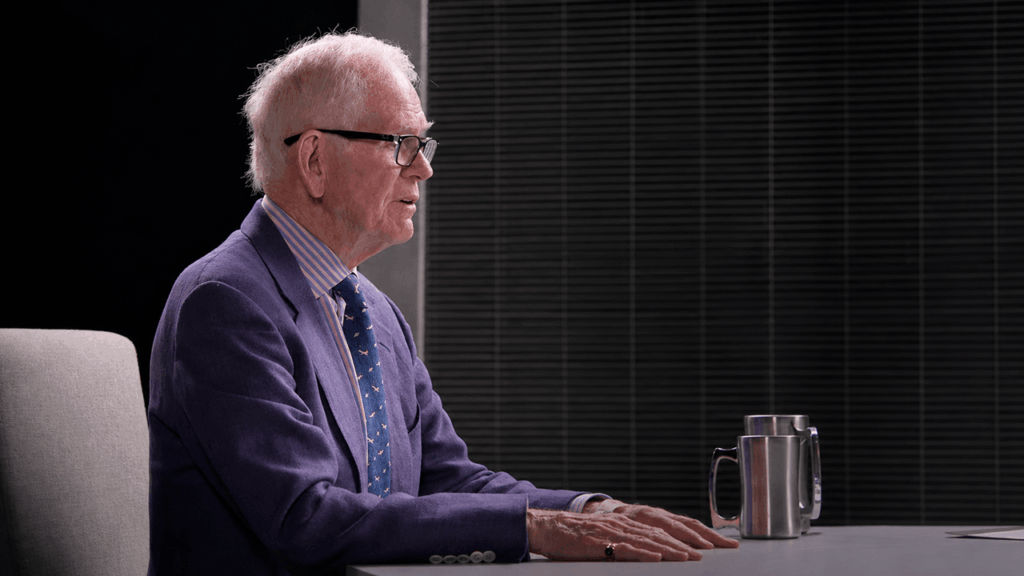
Jeremy Grantham, co-founder of Boston-based institutional investment firm GMO, made the comments during a wide-ranging interview on Steven Bartlett’s Youtube series “The Diary of a CEO.” The interview notes that the statements are the opinions of Grantham and are “not the opinions of GMO.” He drew on six decades of market experience and a career that included managing up to $165 billion in assets at peak.
The AI Bubble and What Comes Next
Grantham placed AI alongside the railroads and the internet as one of the defining ideas of the last two centuries. That distinction, he argued, is exactly what makes the current moment dangerous.
“The great bubbles always occur around the very most important ideas,” Grantham told Bartlett. “The railroads, everyone could see that it would change the world. And everyone wanted to put their money in. They over-invested, and even though the railroads were a spectacularly powerful idea, the railroads collapsed their stocks, and everybody lost a ton of dough.”
He said AI is following that same arc. Amazon, he noted, rose six to seven times during the 1999 tech run-up before falling 92% in the crash. It later inherited the retail world. Grantham expects AI to follow a similar path: the idea survives, but the stocks do not.
“If you look at the data, it would be compatible with history for the peak to be very soon,” he said.
Grantham added:
“This is, I think, the biggest investment bubble in American history.”
He cited SpaceX as the clearest symbol of speculative excess, noting the company defines its addressable market as a quarter of global GDP and describes opportunities such as mining asteroids. “In 50 years, people will look back and tell stories about SpaceX and its prospectus, like they tell stories about the South Sea Bubble,” he remarked.
What Grantham Recommends
Grantham’s portfolio prescription for ordinary investors is specific. He said to put roughly 60% of money into a broad-based index of non-U.S. equities, covering emerging markets, Europe, Japan, Canada, and Australia. He noted that emerging markets gained 65% over the prior 12 months compared with 25% for the S&P 500.
The remainder, in his view, belongs in bonds, a small position in precious metals such as gold and silver, and real estate where practical. He directed investors to treasurydirect.gov as a way to buy U.S. government bonds directly without paying brokerage commissions.
He was direct about U.S. stocks. “Don’t own US stocks. That’s a simple strategy that you can act on,” he said.
For context, Grantham pointed to the Japanese stock market, which peaked in 1989 at 65 times earnings, then fell for 20 years. It took 35 years for the Nikkei to fully recover. He said the U.S. market today is trading at 35 to 40 times earnings, not as extreme as Japan at peak, but far above historical norms.
The message arrives at a time when U.S. stock market participation by retail investors stands at its highest level in modern history. Individual investors directed unprecedented amounts of capital into Wall Street in 2025, while retail traders also accounted for a larger share of overall market activity. Long-term forces suggest this heightened participation is more likely to endure than fully retreat, but when retail investors are deeply committed to the market, what becomes of them during a 70% drawdown?
Why Wall Street Won’t Tell You This
Grantham argued that large investment firms have a structural incentive to stay optimistic regardless of valuations. He recounted a 1998 or 1999 debate in front of 1,200 analysts where 99% of the 400 self-identified market experts acknowledged the market was priced to guarantee a major bear market. None of their employers publicly warned clients.
“You will not receive the advice from investment advisers to get your tail out of the market, ever,” he stressed. “It is not good business for them to do that, and they will not ever say it to you.”
He explained that GMO lost half its client book in the two and a quarter years it spent warning clients ahead of the 2000 crash, simply because the market kept rising during that period, and clients interpreted caution as incompetence.
House Prices and Inequality
Grantham also weighed in on housing. He said that in the United Kingdom, a typical home sold for 3.4 times family income in 1994. That ratio has since risen to more than 10 times in some areas. He said a 30% price decline, while significant, would still leave homes expensive by historical standards.
On inequality, he said the U.S. Gini coefficient, a measure of wealth concentration, now sits alongside Brazil and Mexico. He called for a gradual shift in tax policy, noting that between 1935 and 1975, the bottom quarter of earners made slightly above average gains while the top quarter made slightly below, resulting in broad prosperity. “We did much more helping the poor and taxing the rich in the 1950s and ’60s and ’40s than we do today,” he said.
Grantham on Bitcoin
Grantham was unambiguous on cryptocurrency. He told Bartlett he owns none, has never owned any, and does not intend to own any.
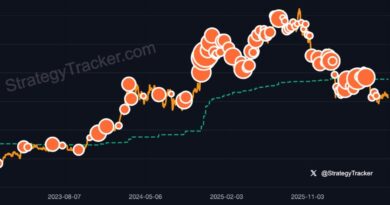
“I think it’s an unnecessary piece of nonsense. It facilitates nothing except criminals moving money so they can’t be seen. It’s not a store of value since it bounces around all over the place, just down from $120K to $60K because it felt like it. So, it’s not stable. It’s volatile as hell.”
Grantham continued:
“It’s not used conveniently as a medium of exchange. You can’t go into a shop and use it easily. It does one thing very, very well. It’s a means of speculating beautifully.”
When asked directly whether bitcoin would eventually reach zero, he did not hesitate. “Well, in the distant future, yes, it will certainly go to zero, but it may take a long time. And you know, in the distant future, everything goes to zero,” he claimed.
Advice for Entrepreneurs and Workers
For founders, Grantham said to lock up capital now if possible, build cash reserves, and brace for tighter credit markets. For workers, his advice was to develop practical, durable skills, particularly in engineering, mechanical repair, and science, and to build strong community ties.
Asked whether he would recommend living in the United States, he declined to answer directly, citing the country’s eroding social contract and widening inequality. He pointed to Denmark, Japan, France, and Germany as societies with stronger safety nets and better outcomes on measures such as maternal mortality and life expectancy.